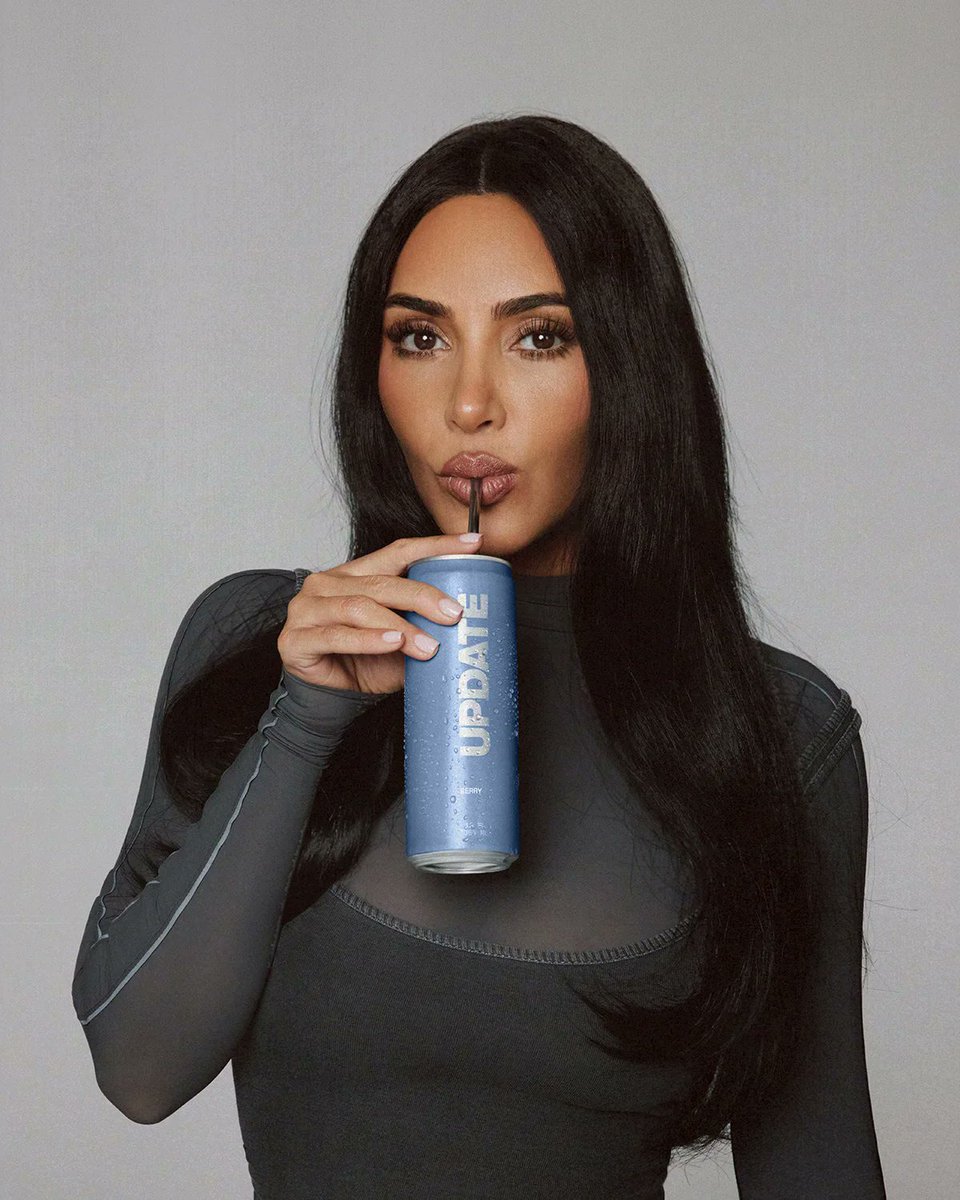
A paraxanthine drink in 4,000 Walmarts says more about the future of wellness than any celebrity launch.
Kim Kardashian’s partnership with Update, a paraxanthine‑based energy drink, marks one of the most ambitious celebrity entries into the functional beverage space. The brand’s relaunch — new formulation, redesigned packaging, and a 4,000‑store Walmart rollout — positions Update as a science‑led alternative to traditional caffeine drinks. The challenge is whether this combination of ingredient innovation, celebrity capital, and mass distribution can hold attention in a category defined by saturation, loyalty, and rapid trend turnover.
Paraxanthine’s promise: what the research actually shows
Paraxanthine is the primary metabolite of caffeine — the compound the body naturally converts caffeine into. Early studies suggest several potential advantages:
- Smoother stimulation with fewer jitters compared to caffeine
- Improved reaction time and cognitive performance in controlled trials
- Reduced anxiety‑like side effects in comparison to caffeine
- Lower impact on heart rate and blood pressure in small studies
- Faster clearance from the body, reducing the likelihood of a crash
These findings come from early-stage research, often with small sample sizes. Scientists emphasise that long‑term safety data is still limited, and paraxanthine has not yet undergone the decades of population‑level observation that caffeine has. As one sports nutrition researcher noted in a recent interview, “Paraxanthine is promising, but we’re still in the early innings. It’s not a proven replacement for caffeine — yet.”
This tension — compelling short‑term data vs. incomplete long‑term research — shapes both Update’s opportunity and its vulnerability.
Ingredient-led branding as a strategic differentiator
Update’s reliance on paraxanthine is not just a formulation choice; it is a brand architecture decision. In a category dominated by caffeine‑based incumbents, ingredient‑led differentiation is one of the few viable strategies for new entrants.
Compared to competitors:
- Celsius leans on thermogenic claims
- Prime Energy leans on influencer hype
- Alani Nu leans on flavour and aesthetic appeal
- Ghost Energy leans on gaming and performance culture
- Zoa (The Rock) leans on “clean energy” with vitamins and electrolytes
Update’s angle — “clean energy powered by paraxanthine” — is distinct. But it also requires consumer education, which is expensive and slow. Ingredient‑centric brands often rise quickly when the science is compelling, then fade if the novelty wears off or the research evolves.
Kardashian’s operational influence and the power of aesthetic coherence
Kardashian’s involvement is not a superficial endorsement. Reporting shows she became a regular customer, provided feedback on flavour and formulation, and joined as co‑founder during the brand’s strategic rebuild.
Her influence is visible in three areas:
- Aesthetic strategy — minimal, neutral, premium wellness cues
- Brand discipline — consistent visual identity across touchpoints
- Cultural reach — immediate awareness and distribution leverage
Industry analysts note that Kardashian’s track record (Skims, SKKN, private equity) positions her as a credible operator, not just a celebrity face. One consumer‑goods strategist put it bluntly: “Kardashian doesn’t just bring attention — she brings operational seriousness. That’s rare in celebrity CPG.”
This credibility matters in a category where most new brands struggle to secure shelf space, let alone national distribution.
Consumer reactions: early signals from the market
Early consumer sentiment around Update clusters into four themes:
- Curiosity about paraxanthine as a “cleaner caffeine”
- Positive feedback on flavour, especially Pineapple and Grape
- Interest in the “no jitters, no crash” promise
- Caution about long‑term safety and limited research
Some early customer reviews highlight a “smoother lift” and “more stable focus,” while others note they “felt no difference compared to caffeine.” This split is typical for functional beverages, where subjective experience varies widely.
The key question is whether Update can convert curiosity into repeat purchase — the metric that determines whether a beverage survives beyond its launch cycle.
Competitive pressure: emerging brands and new strategies
Beyond the major incumbents, Update is competing with a wave of emerging brands using unconventional strategies:
- Barcode (Kendall Jenner) — celebrity‑driven hydration
- OCA — plant‑based caffeine alternatives
- Proper Wild — clean‑label energy shots
- Reign Storm — “clean energy” with natural caffeine
- Vibe — adaptogen‑infused energy
These brands are fragmenting the category, each carving out micro‑segments. Update’s challenge is to avoid becoming a niche novelty and instead establish a durable position in the mainstream.
Regulatory considerations: the next frontier for paraxanthine
Paraxanthine is currently permitted in beverages, but regulatory scrutiny is increasing as novel stimulants enter the market. Potential challenges include:
- labelling requirements for emerging ingredients
- claims restrictions around cognitive performance
- future FDA guidance on stimulant alternatives
- pressure for long‑term safety data
If paraxanthine becomes a regulatory focus, Update will need to adapt quickly — especially given its reliance on the ingredient as its core differentiator.
Sustaining consumer interest: the long-term engagement challenge
Functional beverages often experience a spike in early adoption followed by a steep drop‑off. To maintain engagement, Update may need to:
- expand flavour ranges
- introduce limited‑edition drops
- build community around “clean energy” culture
- invest in education around paraxanthine
- partner with fitness, wellness, or productivity influencers
- diversify formats (shots, powders, or low‑calorie variants)
Kardashian’s involvement gives Update a strong launch platform, but long‑term success requires consistent innovation and clear communication.
Summary
Update is one of the most strategically ambitious celebrity‑backed beverage launches in recent years. Its success depends on whether paraxanthine can move from niche stimulant to mainstream alternative, and whether Kardashian’s operational influence can translate cultural visibility into sustained retail performance. The brand’s positioning — science‑first, aesthetically controlled, mass‑market — gives it a clear identity in a crowded field. But long‑term viability will hinge on consumer experience, scientific validation, regulatory clarity, and the brand’s ability to maintain momentum in a category where novelty fades quickly.
 The Regist