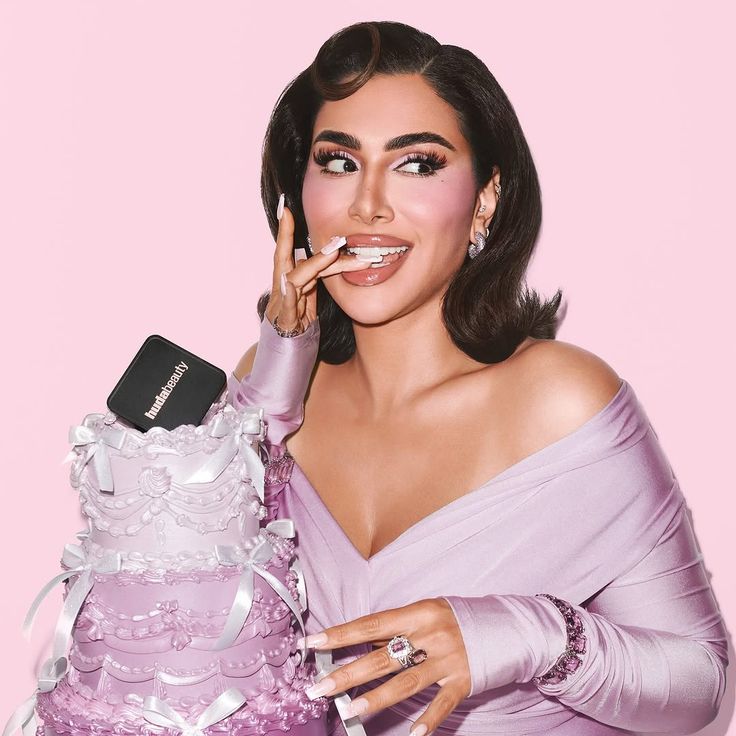
A founder‑led beauty brand collided with geopolitics — and discovered the limits of influence.
When Huda Beauty entered the centre of a geopolitical backlash, many observers were surprised. But the scandal didn’t emerge from a product failure or a marketing misstep — it emerged from a structural tension that has been building across the entire beauty industry.
For readers unfamiliar with the incident: Huda Beauty faced widespread criticism after the founder’s public stance on a geopolitical conflict clashed with consumer expectations. The reaction was immediate, global, and unforgiving — revealing how fragile founder‑led brands become when political realities collide with personal influence.
This wasn’t just a beauty‑industry controversy. It was a case study in how modern audiences hold brands accountable in real time.
Founder‑Led Brands: High Influence, High Exposure
Huda Beauty’s success is built on a powerful formula:
- A charismatic founder
- A loyal global audience
- A personality‑driven brand identity
- Direct emotional connection with consumers
But this model carries a structural weakness: the founder’s voice becomes the brand’s voice — and the brand inherits the founder’s political footprint.
This is not unique to Huda Beauty. We’ve seen similar collapses of trust when founder‑led brands misread the political climate:
- Lush faced backlash for its anti‑police campaign.
- Glossier struggled after employee allegations contradicted its “inclusive” image.
- Kylie Cosmetics faced criticism when personal controversies overshadowed product launches.
The pattern is consistent: When the founder becomes the institution, the institution becomes vulnerable.
The Misalignment: When Values and Visibility Collide
The scandal escalated because consumers perceived a misalignment between:
- The brand’s public values
- The founder’s political stance
- The expectations of a global audience
In today’s environment, neutrality is rarely accepted. Silence is interpreted as a position. A position is interpreted as a moral stance. And a moral stance is interpreted as a brand identity.
Consumers no longer separate the product from the worldview behind it.
This is the new architecture of accountability.
Public Scrutiny Has Become Institutional Power
The public now operates with the speed and influence once reserved for media institutions. During the Huda Beauty scandal, consumers:
- Circulated screenshots
- Contextualised the political implications
- Shared commentary from experts and activists
- Demanded clarity
- Rejected vague or delayed responses
This mirrors other high‑profile collapses of narrative control:
- Balenciaga’s scandal, where public interpretation outpaced corporate messaging
- Shein’s labour controversies, amplified by decentralised investigative content
- Morphe’s downfall, driven by consumer‑led documentation of quality issues
The public no longer waits for official statements. They build the narrative themselves.
Speed Is the New Credibility
One of the most damaging elements of the scandal was timing. Huda Beauty’s response lagged behind the velocity of public reaction.
In a real‑time information ecosystem, delay is interpreted as:
- Avoidance
- Uncertainty
- Dishonesty
- Strategic silence
Brands must now operate with crisis‑response frameworks that match the speed of public scrutiny.
What Timely Response Actually Means Today
- Immediate acknowledgement (within minutes or hours, not days)
- Transparent updates even before full information is available
- Consistent messaging across platforms
- Clear timelines for follow‑up communication
A slow response is no longer a cautious response. It is a credibility risk.
Geopolitics Doesn’t Bend to Branding
The scandal revealed a truth many brands avoid: you cannot market your way out of geopolitics.
When a conflict is global, emotionally charged, and morally polarising, brands cannot rely on:
- Aspirational aesthetics
- Founder charisma
- Curated messaging
- Community‑coded language
Consumers expect moral clarity, not marketing clarity.
This is why the scandal resonated so widely — it exposed the limits of influence in a world where political awareness is a baseline expectation.
The Beauty Industry Is Entering an Accountability Era
The Huda Beauty incident is part of a broader shift. Consumers now demand:
- Ingredient transparency
- Ethical consistency
- Political awareness
- Responsible influence
- Alignment between values and behaviour
This mirrors shifts in other industries:
- Fashion (sustainability scrutiny)
- Tech (privacy accountability)
- Media (bias and transparency demands)
Beauty is no longer insulated by aspiration. It is being pulled into the same accountability structures as every other global industry.
What Brands Can Learn: Actionable Strategies
To navigate this new landscape, brands — especially founder‑led ones — must adopt institutional‑grade practices.
A. Build a Crisis‑Response Infrastructure
Not reactive, but pre‑planned:
- Escalation protocols
- Cross‑functional crisis teams
- Pre‑approved messaging frameworks
B. Separate Founder Identity From Brand Identity
This protects both the founder and the institution.
C. Communicate With Evidence, Not Emotion
Consumers trust:
- Data
- Timelines
- Receipts
- Transparency
Not vague statements.
D. Monitor Geopolitical Sensitivities
Brands must understand the political implications of their global footprint.
E. Respond in Real Time
Even a simple “We are aware and will update shortly” prevents narrative collapse.
The Regist’s View
Huda Beauty didn’t just face a scandal. It faced a structural reckoning.
A founder‑led brand collided with a geopolitical moment — and discovered that influence has limits when the public expects institutional‑level clarity.
This is the new landscape:
- Influence is no longer enough.
- Silence is no longer neutral.
- Audiences are no longer passive.
- Geopolitics is no longer avoidable.
Brands that operate at global scale must communicate with the precision of institutions, not influencers.
Clarity is the new currency of trust.
 The Regist