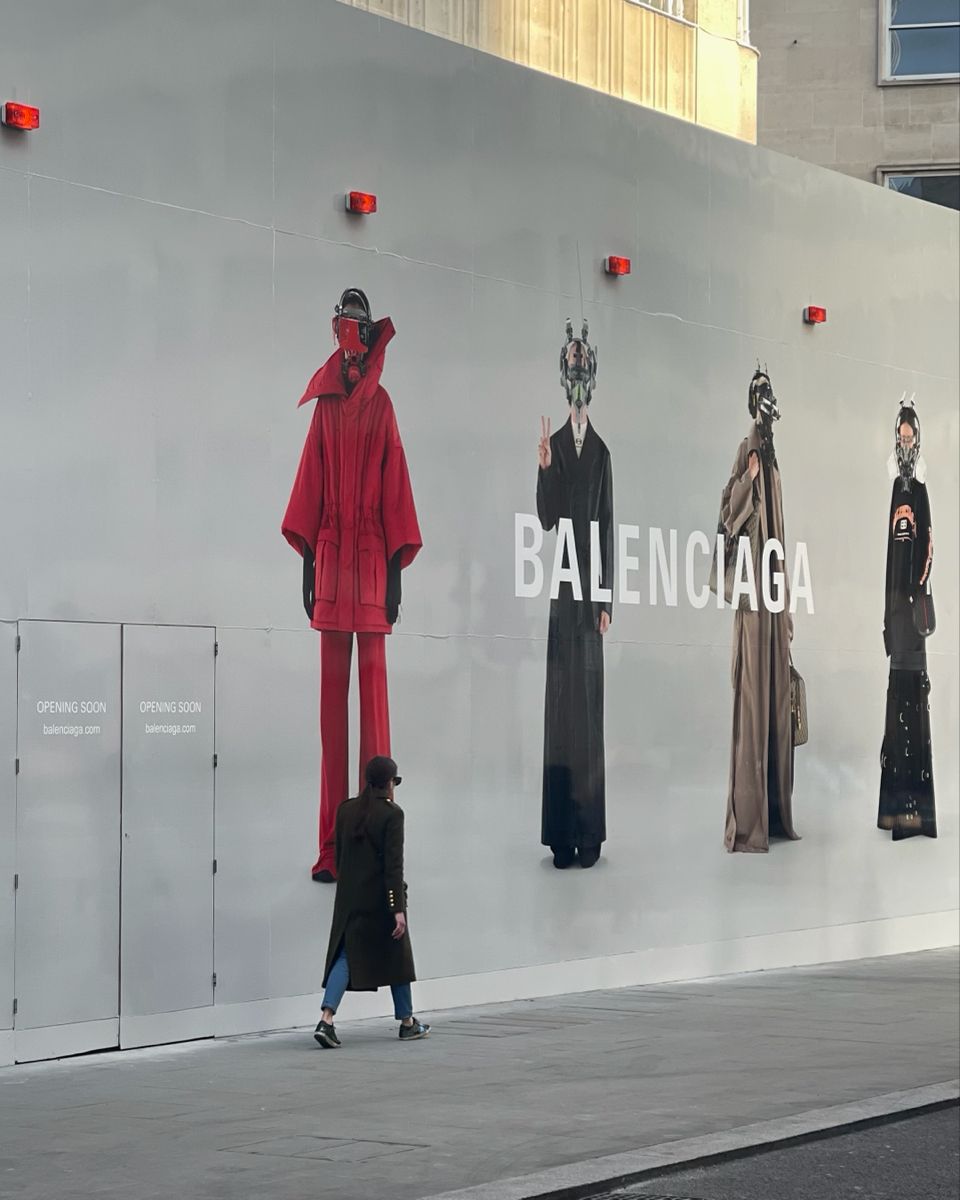
The gap between public outrage and corporate reality.
The Balenciaga scandal became one of the most polarising cultural flashpoints of the year — not because of what actually happened, but because of how quickly public perception hardened into certainty. Within hours, the internet had constructed a narrative of intent, conspiracy, and moral collapse. Meanwhile, the corporate reality behind the scenes was slower, more procedural, and far more complex.
This misalignment — between the speed of public outrage and the slowness of institutional process — is the real story. And it reveals a structural truth about modern crises: Outrage moves at the speed of emotion. Corporations move at the speed of governance.
This article examines what the public misunderstood, what the industry actually did, and what the scandal reveals about the future of brand accountability.
Public Outrage Operates in Minutes — Corporate Governance Operates in Weeks
The public expected Balenciaga to respond instantly. But global luxury houses operate through multi‑layered systems that cannot move at social‑media speed.
Corporate governance refers to the internal structures that determine how decisions are made — including legal review, compliance, risk assessment, and executive approval. These systems are slow by design.
Why Corporate Responses Lag Behind Outrage
- Legal Teams Must Assess Liability
- Crisis Consultants Must Draft Statements
- Executives Must Align Across Regions
- Agencies Must Be Contacted and Investigated
- Holding Companies Must Approve Public Messaging
Data Insight
Studies on crisis‑response timelines show that the average corporate reaction time is 48–72 hours, while public outrage peaks within 6–12 hours. The gap is structural, not intentional.
Key Takeaway
The public interprets delay as guilt. Corporations experience delay as due process.
People Assumed Intent — When the Real Issue Was Governance Failure
The dominant narrative was that Balenciaga intentionally approved harmful imagery. But the scandal was not about intent — it was about operational misalignment.
Where Governance Failed
- Fragmented Creative Oversight
- Overreliance on External Agencies
- Lack of Final‑Stage Review
- Distributed Approval Chains
- Insufficient Risk Controls
This is not unique to fashion. It is a structural issue across industries.
Cross‑Industry Examples
- Boeing 737 Max: A governance failure, not a single bad decision.
- Facebook–Cambridge Analytica: Oversight gaps, not deliberate malice.
- Equifax Data Breach: Systemic security failures, not intentional exposure.
Key Takeaway
The scandal was not a conspiracy — it was a systems failure.
The Public Treated Balenciaga as a Single Actor — But Luxury Houses Are Ecosystems
People imagined Balenciaga as a unified entity making deliberate choices. In reality, luxury brands are sprawling networks.
Who Actually Touches a Campaign
- Creative Directors
- External Production Agencies
- Set Designers
- Photographers
- Legal Teams
- Regional Marketing
- Global PR
- Holding‑Company Executives
No single person sees the entire process end‑to‑end.
Why This Matters
When something goes wrong, the public looks for a villain. Corporations look for a workflow failure.
Key Takeaway
The public sees a single decision. The brand sees a chain of misaligned decisions.
Outrage Collapsed Complexity Into a Single Narrative
Social media thrives on simplicity. The scandal was flattened into a moral binary:
“Balenciaga did this intentionally.”
But the reality was far more complex:
- A Mismanaged Creative Process
- A Breakdown in Oversight
- A Legally Constrained Response
- A Slow, Bureaucratic Investigation
Data Insight
Research on misinformation shows that simple narratives spread 6x faster than complex explanations — especially during crises.
Key Takeaway
Outrage simplifies. Corporate reality complicates.
The Scandal Exposed the Limits of Creative Autonomy
Balenciaga’s brand identity has long relied on provocation. But the scandal revealed the operational risk of:
- Unchecked Creative Freedom
- Insufficient Brand Controls
- Weak Agency Contracts
- Lack of Cultural Risk Assessment
Case Study: The Agency Fallout
Balenciaga severed ties with the production company involved — signalling where the brand believed the breakdown occurred.
Key Takeaway
Creative autonomy without governance is a liability.
What the Public Missed: The Internal Corporate Reckoning
While the public demanded punishment, the brand undertook a quieter, more consequential restructuring.
Internal Changes Implemented
- Revised Approval Workflows
- Centralised Creative Oversight
- Mandatory Legal Review for Campaigns
- Strengthened Agency Contracts
- New Compliance Protocols
These changes matter more than public apologies — but they rarely trend.
Key Takeaway
The real accountability happened internally, not online.
Why the Scandal Became a Cultural Flashpoint
The Balenciaga scandal tapped into broader cultural anxieties:
- Distrust of Elite Institutions
- Fear of Hidden Agendas
- Suspicion of Luxury Culture
- The Collapse of Narrative Control
- The Speed of Misinformation
The scandal became a vessel for cultural tension — not just brand criticism.
Key Takeaway
The scandal resonated because it intersected with existing distrust, not because of the campaign itself.
Actionable Strategies for Brands (With Clear Subheadings)
A. Build Real‑Time Crisis Infrastructure
- Create Rapid‑Response Teams
- Draft Pre‑Approved Crisis Templates
- Establish 24‑Hour Monitoring Protocols
B. Centralise Creative Oversight
- Implement Final‑Stage Review
- Reduce Fragmented Approval Chains
- Require Cross‑Functional Sign‑Off
C. Strengthen Agency Accountability
- Add Clear Deliverable Standards
- Require Cultural Risk Assessments
- Enforce Contractual Penalties
D. Communicate Early, Even Without Full Answers
- Issue Preliminary Statements
- Acknowledge Public Concern
- Provide Timelines for Updates
E. Train Teams in Cultural and Geopolitical Literacy
- Offer Scenario‑Based Training
- Build Cross‑Cultural Review Panels
- Integrate Risk‑Assessment Frameworks
Key Takeaway
Brands must build systems that match the speed and complexity of modern outrage cycles.
Conclusion: The Scandal Was Never What People Thought
The Balenciaga scandal wasn’t a story of intent. It was a story of misalignment — between public outrage and corporate reality, between creative autonomy and operational oversight, between the speed of social media and the slowness of institutional process.
The public wanted a villain. The reality was a system failure.
Final Takeaways
- Outrage moves faster than governance.
- Corporate silence is often legal, not moral.
- Creative autonomy requires structural accountability.
- Brands must modernise their crisis infrastructure.
- Clarity is no longer optional — it is survival.
 The Regist