
In the luxury market, memory isn’t organic; it is engineered.
When a premier luxury house faces a catastrophic brand crisis, the playbook differs entirely from standard corporate damage control. Standard crisis public relations relies on loud, continuous public apologies and immediate transparent overhauls. High luxury, conversely, operates on an entirely different engine: silence, prestige, and time.
As Paris Couture Week concludes, the front-row attendance lists and surging street-style metrics reveal a striking structural truth: corporate rehabilitation has successfully outpaced public outrage. Less than four years after facing intense global backlash over its late-2022 marketing campaigns, Balenciaga has not just been re-admitted to the mainstream—it has been systematically re-anchored at the centre of fashion authority.
For industry analysts, creators, and consumers alike, this evolution serves as a masterclass in market psychology. It proves that a highly funded, institutional PR apparatus does not need to win a cultural argument or seek emotional absolution. It simply needs to execute a sterile, multi-phased long game that relies on the public’s compressed attention span to systematically wipe the slate clean.
Phase 1: The Tactical “Creative Palate Cleanse”
Following the 2022 crisis, Balenciaga’s initial recovery phase relied on what editorial circles call the “creative palate cleanse”—a deliberate resetting of the consumer’s visual expectations.
[Crisis Event] ➔ [Media Blackout] ➔ [De-escalation via Minimalism] ➔ [Re-introduction of Heritage]
Instead of fighting the daily news cycle with statements, the brand intentionally stripped away its hyper-commercial, meme-driven identity (like the viral trash bags and neon streetwear). The subsequent collections pivoted sharply toward stripped-back runway environments, sterile white backdrops, and an obsessive focus on pure couture dressmaking and heritage tailoring.
By removing the loud, sensationalist marketing hooks that caused the outrage in the first place, the brand deprived the internet of fresh controversy fuel. The aesthetic shift was structural: by lowering the brand’s visibility profile, the narrative was successfully shifted from morality back to craftsmanship.
Phase 2: The Data of Re-Engagement and Market Stabilisation
The success of a corporate turnaround is ultimately measured in financial numbers and institutional metrics, not social media comment sections. Industry data from parent company Kering’s official fiscal reports maps this trajectory clearly, highlighting a calculated shift in leadership and product focus:

The Financial Trajectory
According to Kering’s published financial statements, Balenciaga’s performance under the “Other Houses” division experienced a severe contraction between 2023 and 2025, with estimated revenue losses reaching €850 million during the lowest point of the slump.
However, by the first quarter of 2026, Kering’s market reports confirmed that retail performance at Balenciaga had officially turned positive. This stabilization was not driven by a sudden change of heart from the public, but by two specific commercial maneuvers:
- The Human Variable: Injecting fresh, undisputed creative authority by appointing Pierpaolo Piccioli as Artistic Director in May 2025, which immediately restored institutional confidence.
- The Handbag Lever: Shifting the retail focus away from controversial apparel and heavily prioritising “safe,” high-margin heritage leather goods—specifically the City and Rodeo handbag lines, which consumers buy based on utility and status rather than the brand’s recent marketing history.

Image: Getty / Paris Couture Show 2026, Balenciaga
Phase 3: The Front-Row Return and Institutional Validation
The final stage of any luxury rehabilitation project requires the complicity of the cultural elite. Public outrage cycles are inherently temporary, but institutional infrastructure—the stylists, editors, celebrities, and buying directors who dictate what is considered “in vogue”—is permanent.
During Paris Couture Week, the strategic deployment of highly protected editorial talent and top-tier celebrity attendance served as the ultimate industry green light. The calculation relies on a predictable three-step pattern:
- The Safe Entry Point: Stylists and buyers are re-introduced to the brand via high-end, clean editorial pieces rather than loud streetwear, making it “safe” for professionals to work with the house again.
- The Front-Row Return: Once top-tier figures resume front-row attendance without experiencing secondary public backlash, the broader market recognizes that the brand has been absolved by the elite.
- The Collective Amnesia: The news cycle shifts to the next immediate viral internet crisis, leaving the rehabilitated brand with a pristine, engineered reset.
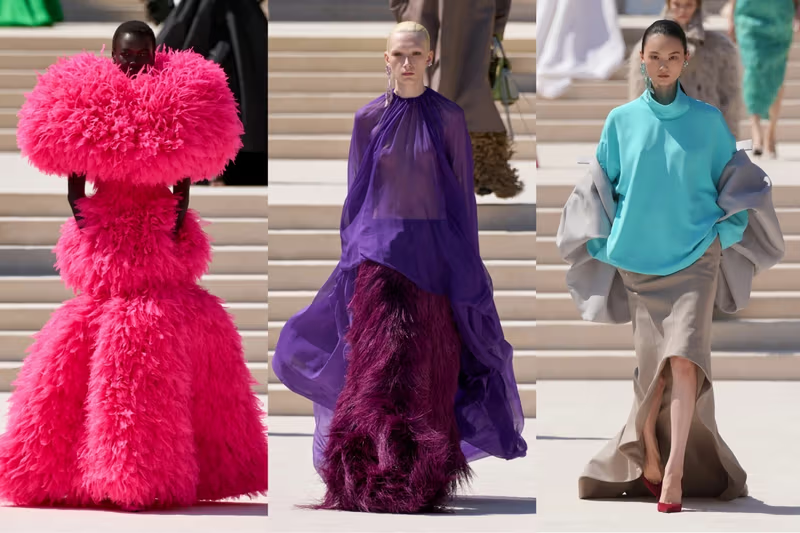
Image: Getty / Paris Couture Show 2026, Balenciaga
The Lesson for the Modern Consumer
Balenciaga’s trajectory proves that in the modern attention economy, public memory has an incredibly short half-life. A sophisticated PR machine does not try to change minds or engage in emotional debates; it simply outlasts them.
For brands, the lesson is clear: with enough capital, careful control of visual assets, a temporary retreat into legacy craftsmanship, and a calculated reliance on short public attention spans, any narrative can be rewritten. The institutional reset isn’t emotional; it is procedural.
But for the consumer, this mechanics-first approach raises a more critical question. When luxury houses can engineer collective amnesia through beautiful imagery and strategic silence, we must ask ourselves: Are we genuinely moving on, or are we simply consuming a pivot that was too perfectly engineered to resist?